


Daily Fiber Requirement: How Much Is Enough?
24 Jun 2025
Fibre, also known as roughage or bulk, is a plant-derived compound that is essential for our health. As humans, we’re incapable of digesting dietary fibre, however, we still need it to support our digestive health and regular bowel movements. But how much is the right amount of fibre to have?
In this article, we’ll discuss just how much fibre you should have based on age and gender. We’ll also explore some ways you can increase your fibre intake to help you support your digestive health. So, let’s get started!
What is Fibre?
Fibre is a type of carbohydrate that the body can’t digest. Unlike other carbs, it moves through the digestive tract mostly unchanged, promoting better gut health, reducing cholesterol, and supporting heart function. Including the right amount of fibre in your meals is essential to meet the daily fiber requirement and support healthy ageing. There are two main types of fibre:
1. Soluble
Soluble fibre dissolves in water and forms a gel-like substance in the gut. It helps lower blood cholesterol and regulate blood sugar levels. You can find it in foods like oats, lentils, apples, and citrus fruits. One of the lesser-known oats benefits is their ability to support heart health thanks to their high soluble fibre content.
2. Insoluble
Insoluble fibre, on the other hand, adds bulk to stool and helps food move through your digestive system more easily. It’s essential for preventing constipation, especially in older adults. Whole grains, nuts, and many vegetables are excellent sources.
Why Is Fibre An Important Part of Our Diet
Fibre isn’t digested but plays a vital role in gut health. It helps lower cholesterol, regulate blood sugar, and improve digestion. Soluble fibre offers satiety, while insoluble fibre adds bulk to stool.
As we age, digestion slows down. Meeting the daily fiber requirement through a balanced diet can help manage age-related digestive issues and support long-term health. Including dry fruits and whole grains can help meet your dietary fiber requirement per day.
Recommended RDA for Fibre for Adults in a Day
|
Category / Age Group
|
Physical Activity Level |
Dietary Fibre (g/day) |
|
Adult men (>18 years, 65 kg) |
Sedentary |
30 g |
|
|
Moderate |
40 g |
|
|
Heavy |
50 g |
|
Adult women (>18 years, 55 kg) |
Sedentary |
25 g |
|
|
Moderate |
30 g |
|
|
Heavy |
40 g |
High-fibre Foods Readily Available in The Indian Diet
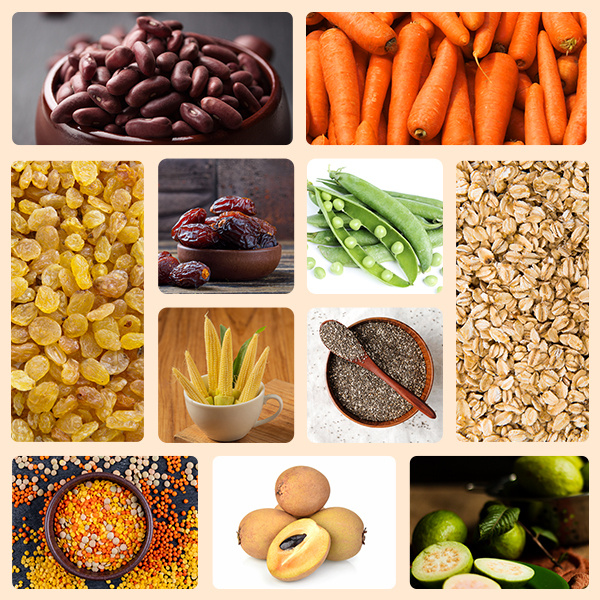
Meeting the daily fiber requirement for adults doesn’t have to be complicated. Many everyday Indian foods are naturally rich in fibre and can help fulfil the fiber requirement per day with ease. Here are some high-fibre foods and their approximate fibre content per 100g.
- Kidney Beans: 36.8g
- Chia seeds: 34.4g
- Lentils: 10.43g
- Oats: 10.1g
- Chickoo: 9.6g
- Dates: 8.9g
- Guava: 8.5g
- Baby corn: 6.9g,
- Peas: 6.32g
- Raisins: 4.5g
- Carrots: 4g
Including these foods regularly in your meals can improve fiber intake and help meet the minimum fiber per day for better digestion and long-term health. You can also explore traditional fiber rich recipes using lentils, oats, and legumes to make your meals both nourishing and delicious.
How to Increase Fibre Consumption in Your Diet
|
Tip |
Details |
|
Add fibre to every meal |
Include fruits and vegetables in your meals and eat them before your proteins and carbs. |
|
Choose high-fibre snacks |
Opt for fruits, nuts, seeds, or oat-based protein cookies instead of processed snacks. |
|
Swap regular ingredients with fibre-rich options |
Mix Ragi or other grains into chapati flour; replace white rice with brown rice; choose whole wheat or multigrain bread over white bread. These swaps boost fiber intake and support overall health. |
Examples of High-fibre Indian Dishes
-
Vegetable Pulao + Curd
Brown rice and assorted vegetables offer a rich source of fibre and nutrients. A simple way to support the fiber requirement per day, especially for lunch or dinner. -
Moong & Green Peas Khichdi + Ghee Tadka
Combines moong dal, peas, and carrots to meet the daily fiber requirement for adults while also being gentle on digestion. -
Oatmeal Khichdi + Pickle
A wholesome dish cooked with oats, moong dal, and spices, this is one of the simplest fiber rich recipes for a filling, fibre-packed meal. -
Multigrain Cheela + Mint Chutney
Combines fibre from millets and vegetables with digestive herbs. A delicious and easy way to meet the minimum fiber intake per day.
Tips for Managing Increased Fibre Intake
Increase fibre slowly and drink enough water to prevent digestive discomfort and support smooth digestion. Below are the tips for managing a high-fibre diet effectively:
1. Start Your Day with Fibre
Kickstart mornings with whole grains to support your dietary fiber requirement per day.
2. Choose Whole over Refined
Whole grains and cereals support better digestion and overall gut health compared to refined options.
3. Snack Smart
Include dry fruits like figs and dates in your snacks to boost fibre intake naturally. You can also opt for jaggery oats cookies as a healthier choice.
4. Load Up on Legumes
Adding lentils and beans to your meals supports good gut health and keeps digestion on track.
5. Drink More Water
Staying hydrated helps fibre work better and supports smoother digestion throughout the day.
Conclusion: Eat Fibre, Live Better
In short, fibre is essential for good digestion and overall health. Most adults need around 30g of fibre daily, which you can get by including more fruits, vegetables, legumes, and whole grains in your meals. Prioritising fibre-rich foods is a simple step toward a healthier, happier midlife.
for more insights on nutrition, ageing, and well-being, explore right shift.
Use our health score calculator to assess your current health, then try our free meal plans including one focused on digestive health.
Looking for fibre-rich options? Check out our Millet Oats, Millet Masala Oats, Jaggery Cookies, Jaggery Ragi Cookies, and Jaggery Oats Cookies—nutritious picks to keep your gut and taste buds happy. Make the Right Shift today!
FAQs
